Misleading: Idol immersion video was filmed in India, not Lake Ontario; no threat to salmon
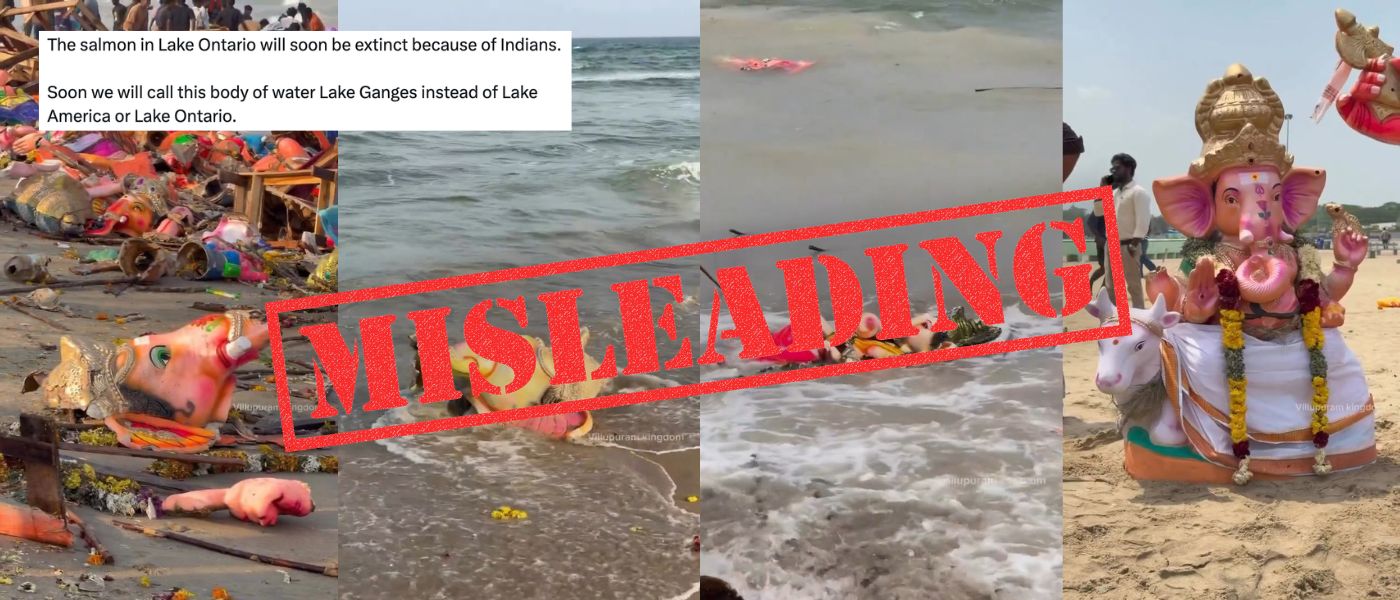
On Sept. 23, an X account posted a video showing a Hindu idol immersion ritual on a beach strewn with debris. It claimed that the clip depicts Lake Ontario and warned that the lake’s salmon population would soon become extinct “because of Indians.”
The post received more than 18,000 likes, 5,400 shares and 1,300 comments.
However, this video was not filmed in Canada. It was recorded at Silver Beach in Cuddalore, in India’s Tamil Nadu state. The clip features Ganesh Visarjan, a ritual to immerse Ganesha idols in water during Ganesh Chaturthi, a Hindu festival honoring the deity Ganesha.
Annie Lab’s investigation also found that Lake Ontario’s salmon population is not about to “be extinct.”
In Canada, idol immersions drew renewed attention recently after a clip that allegedly shows an Indian family immersing an idol into an unidentified lake circulated online.
In fact, Canadian social media users have debated the practice for years, and immersions in the lake are closely regulated by authorities.
Where the video was filmed
The watermark on the X video indicated the clip was initially posted by an account named @villupuramkingdom. We found this username on Instagram and contacted the user who originally published the same video on Sept. 17 (archived here).
The account owner confirmed to Annie Lab that the immersion ritual took place at Silver Beach in Cuddalore.
We then geolocated the beach using Google Maps Street View. A distinctive circular structure in the background of the footage matches one visible on the beach in Street View imagery.
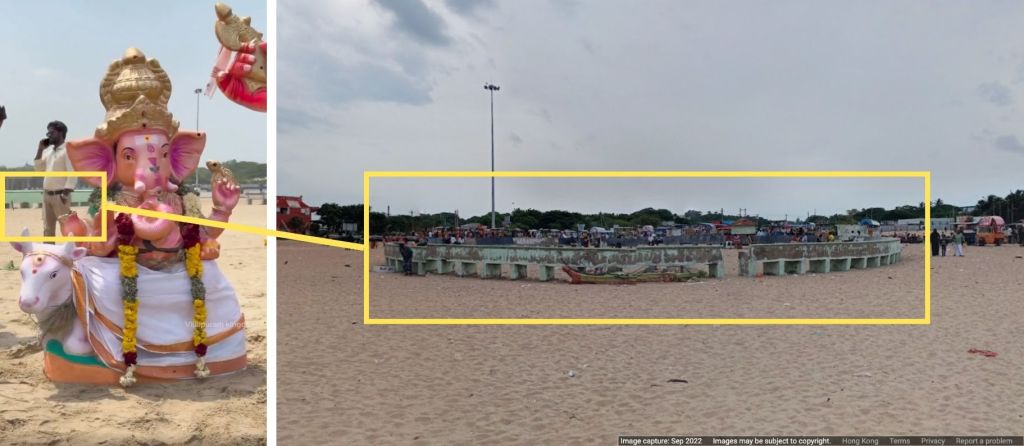
Indian news outlet TV9 Tamil reported on Facebook (archived here) that a Grand Vinayagar idol immersion took place at Silver Beach on Sept. 16.
The Instagram account @villupuramkingdom posted another video from the event the same day (archived here). The same background structures appear in both videos, indicating they were recorded at the same ceremony.

Salmon in Lake Ontario
No available evidence supports the claim that Lake Ontario’s salmon will soon become extinct because of the practice.
Atlantic salmon, the only salmon species native to Lake Ontario, disappeared from the lake by 1898. The Lake Ontario Atlantic Salmon Program started in 2006 to bring the species back, and stocking efforts continue today.
Meanwhile, the lake’s recreational salmon fishery today is mostly Chinook and coho salmon, which are not native.
U.S. and Canadian fisheries agencies jointly set stocking levels for these species, based on the balance between predator fish and their prey.
According to New York and Ontario stocking records, the New York State Department of Environmental Conservation (DEC) and Ontario Ministry of Natural Resources released more than 1.7 million Chinook salmon, 135,000 coho salmon, and 175,000 Atlantic salmon in 2025.
Stocking alone does not sustain the fishery. According to the Lake Ontario Sportfishing Promotion Council, about two-thirds of the lake’s Chinook salmon population are born in the wild.
The DEC estimates that roughly 70% of Chinook salmon caught by anglers are wild. Including coho, more than half of all salmon caught in Lake Ontario are believed to come from natural reproduction rather than hatcheries.
The DEC’s 2024 Lake Ontario Fishing Boat Survey found that the average catch rate for Chinook salmon was the second-highest since the survey began in 1985. Coho catch rates were 33% above the 10-year average.
Water quality data also do not point to a collapse.
The State of the Great Lakes report (archived here) rates Lake Ontario’s overall ecosystem condition as “fair.” Monitoring found no trend in toxic chemical levels in whole fish from 2011 to 2020, while long-term data show improvement since 1977.
Seasonal migration also affects how many salmon are in the lake at a given time. From September through late fall, as water cools, thousands of salmon leave Lake Ontario and swim up tributaries such as the Credit River to spawn.
According to the Mississauga City website (archived here), this annual salmon run draws large numbers of fish out of the lake and into the rivers and streams where they spawn. As a result, salmon numbers in the lake itself may look lower than usual in the fall.
Ganesh Chaturthi near Lake Ontario
Hindu communities in Canada celebrate Ganesh Chaturthi, often with festivals that last several days to mark the birth of Lord Ganesha.
Ganesh Visarjan, the immersion ceremony that concludes the festival, is held at home or at designated public locations, including sites near Lake Ontario such as Toronto and Mississauga.
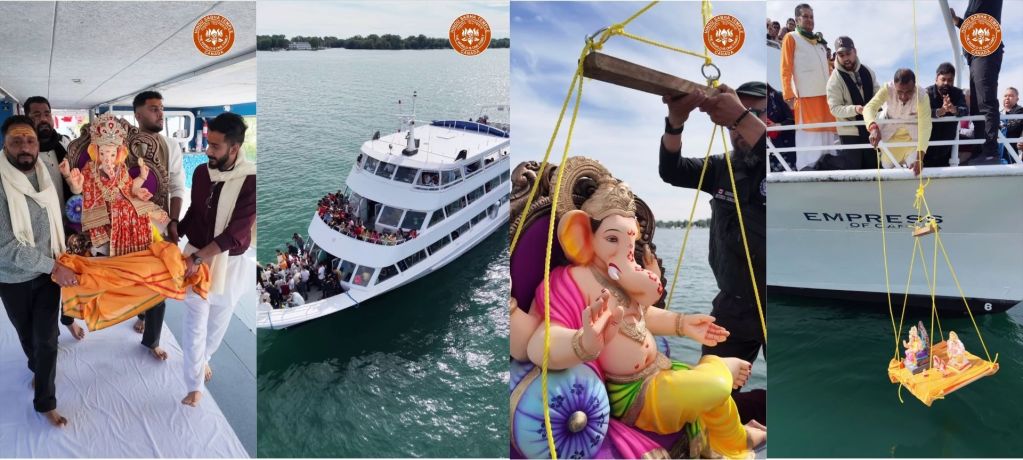
For example, the Hindu Sabha Temple in Brampton, Ontario, held its annual Ganpati Mahotsav from Sept. 14 to 20. Ganpati is another name for Ganesha.
Based on the social media posts from the temple, the Ganpati Visarjan procession took place at Lake Ontario on the last day of the event.
Such immersions generally require permission from authorities. A member of a Hindu temple in Toronto told Annie Lab that organizers there must contact the port authority, and that idols must be made of materials that dissolve naturally in water.


