False: Images of Paris shops hanging ham outside are manipulated using AI
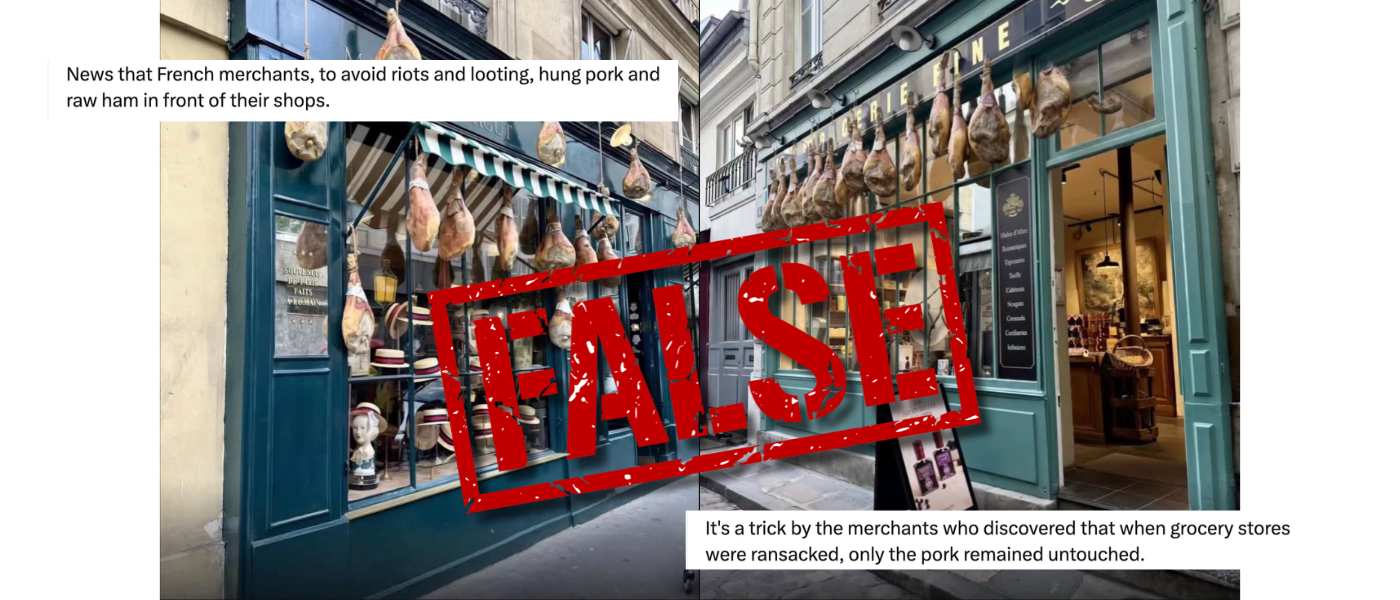
On Oct. 22, an X user shared two images purportedly showing shops in France displaying pork and ham outside their storefronts. The post in Korean claimed that shop owners were hanging the meat to prevent looting or damage amid ongoing protests in the country.
The post received more than 9,900 likes and 2,800 reposts. Similar claims using the same images also appeared on Threads, and Instagram posts in Korean and Chinese. Some commenters praised the purported tactic, implying that Muslim protesters were responsible for the unrest. Islam prohibits eating pork.
However, the two images are manipulated, with pork and ham digitally added to authentic photographs. Annie Lab traced them to images in two different articles (archived here, and here) published by the travel website Blonde Voyage Nashville before the claims began circulating.

First image
Annie Lab found the original photograph of the first shop, Marin Montagut, in a travel blog article published on Nov. 18, 2024, according to the page’s HTML code. The shop is located at 48 Rue Madame, 75006 Paris, France.
The matching camera angle, storefront displays, and window reflections indicate that the viral image was altered from this photograph.
In the altered version, the shop’s nameplate also appears to reflect hanging ham, although none is visible directly in front of it.
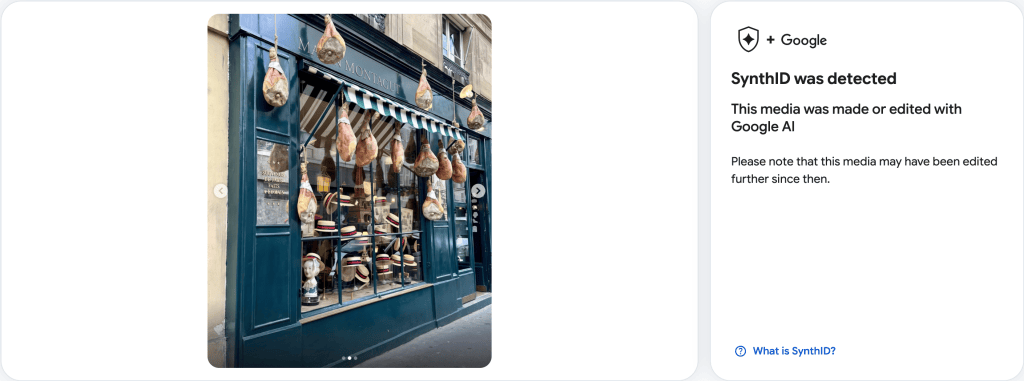
Google Deepmind’s SynthID Detector indicated that the image had been edited using Google AI.
SynthID watermarks embedded in AI-processed audio-visual content are imperceptible to humans, but the tool to identify them is publicly available. This technology has been adopted by tech companies including Google, OpenAI, Nvidia, and ElevenLabs.
Second image
The second image shows Maison Brémond 1830 at 8 Cr du Commerce Saint-André in Paris. We found the original storefront photograph in another article on the same travel blog website, published on Jan. 3 this year.
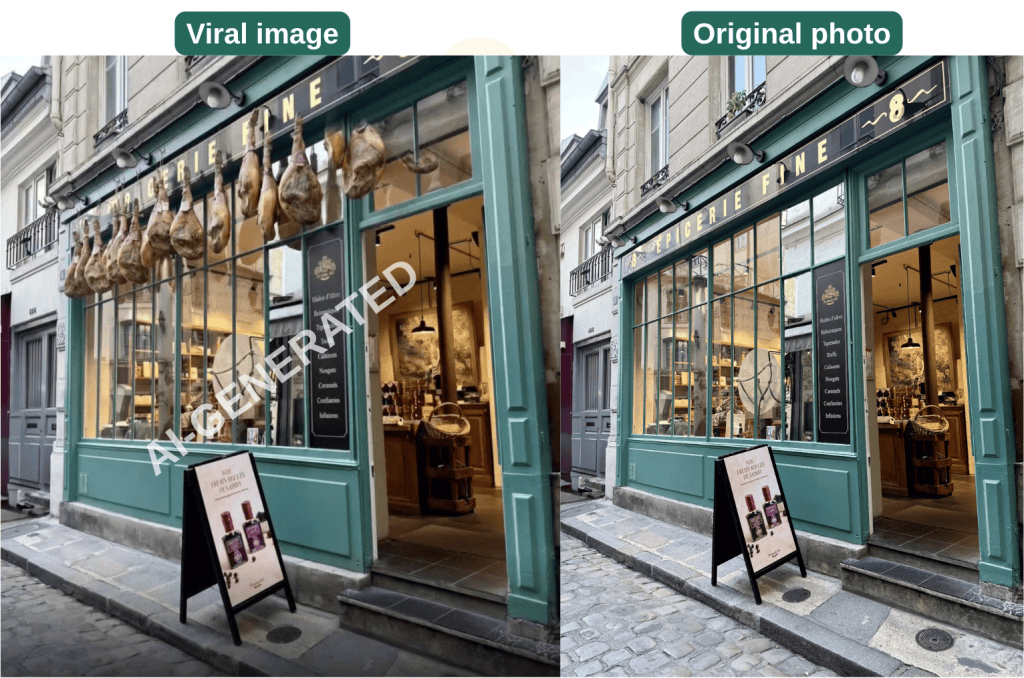
The items displayed inside the shop are identical in both images, and the sign outside is in the same position and at the same angle. The original photograph does not show ham hanging outside.

SynthID Detector returned an uncertain result for the second image downloaded from X. However, it detected a SynthID watermark in a less-compressed version of the same image we found on Instagram.
Claims linking the unrest to immigration
As rioting and looting continue in parts of France, social media users are spreading similar misleading information targeting Muslim immigrants in Europe.
ABC News, Agence France-Presse, and the Associated Press have looked into claims about immigration and social unrest.
Some online posts, for example, alleged that rioters targeted Jewish institutions and businesses while sparing Muslim-owned establishments, but according to Snopes, investigations and statements from police and Jewish community representatives had not produced evidence supporting those claims.
Snopes reported that Marseille Police said businesses were targeted “without any particular distinction.” Representatives of the local Jewish community said businesses owned by Jews, Muslims, and non-Jews had all been affected, the article said.
The unrest also became the subject of political debate. According to the Associated Press, U.S. President Donald Trump and other Republican politicians cited the violence as evidence of problems associated with European immigration policies.
French officials in President Emmanuel Macron’s government rejected those interpretations, arguing that the unrest should be understood in the context of domestic political and socio-economic issues.
Reported reasons for the protests include high living costs, economic pressures, and poor school conditions, while officials have pointed to “opportunistic delinquents” and radical activists, according to ABC News 4, The Guardian, and the BBC.
Full Fact examined several viral claims about the protests involving AI-generated images and videos, edited photographs, or footage from unrelated events. The fact-checking organization found that some material shared as evidence of the unrest was fabricated or presented without proper context.


