Misleading: Video does not show Suzhou dragon boat event blocking views to sell tickets
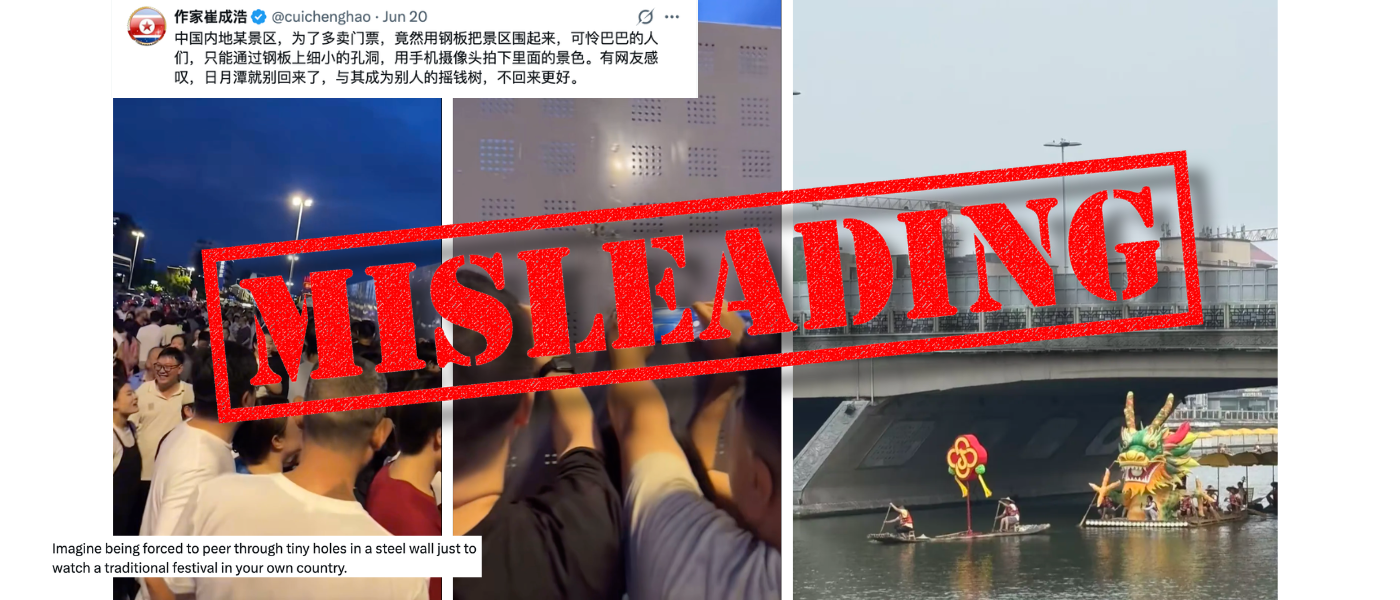
On June 20, a Chinese-language post on X claimed that a tourist attraction in China has been enclosed with steel plates to boost ticket sales, and that tourists could only capture the view inside by pointing their smartphones through tiny holes in the plates.
The video in the post shows a large crowd in front of the barrier on a bridge, with many people aiming their phone cameras at small openings to film the scene behind it.
The post’s comment contrasts tourism practices in mainland China with those at a tourist attraction in Taiwan, Sun Moon Lake, suggesting that the island’s well-known lake should not be “returned” to the mainland.
Presumably, the Sun Moon Lake was mentioned because the viral video was taken during the Suzhou festive celebration on June 19 when visitors watched a Dragon Boat Festival along Suzhou’s city moat, a canal‑like waterway fed by the wider Jiangnan canal system.
Within two days, the X post gained 1,800 likes, over 230 reposts, and more than 380 replies. The same video also spread on Douyin, YouTube, and Threads. An English-language post on X criticized authorities for what it describes as a nationwide pattern of blocking free views under the pretext of crowd safety.
However, Annie Lab found no ticketing arrangements for the Dragon Boat Festival events. The best viewing spot recommended by local authorities was about a five minute walk from where the video was filmed and did not require any ticket.
Where the video was filmed
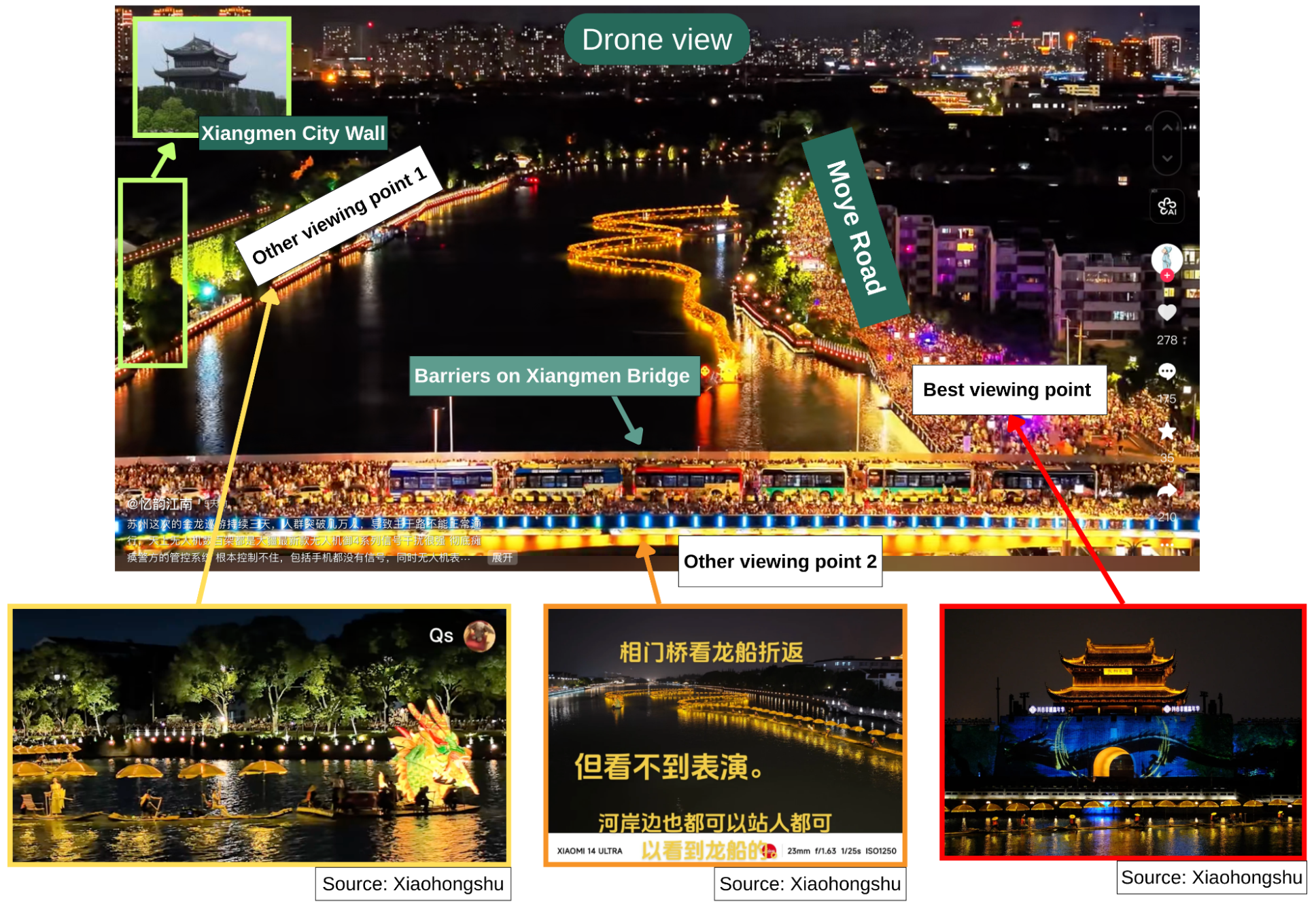
The video was filmed at the Xiangmen Bridge (相门桥) in Suzhou, Jiangsu province, on the night of June 19, when people gathered behind temporary barriers on the north side of the bridge to record the “Golden Dragon” water parade along the moat.
We located the exact shooting spot on Baidu Maps. By searching keywords “苏州景区” (Suzhou scenic area or tourist attraction) and “挡板” (barriers) on Xiaohongshu, we then found several posts (here and here) showing barriers on the north side of Xiangmen Bridge.
The pattern of small holes in the barriers and the streetlights in these posts match what appears in the video.
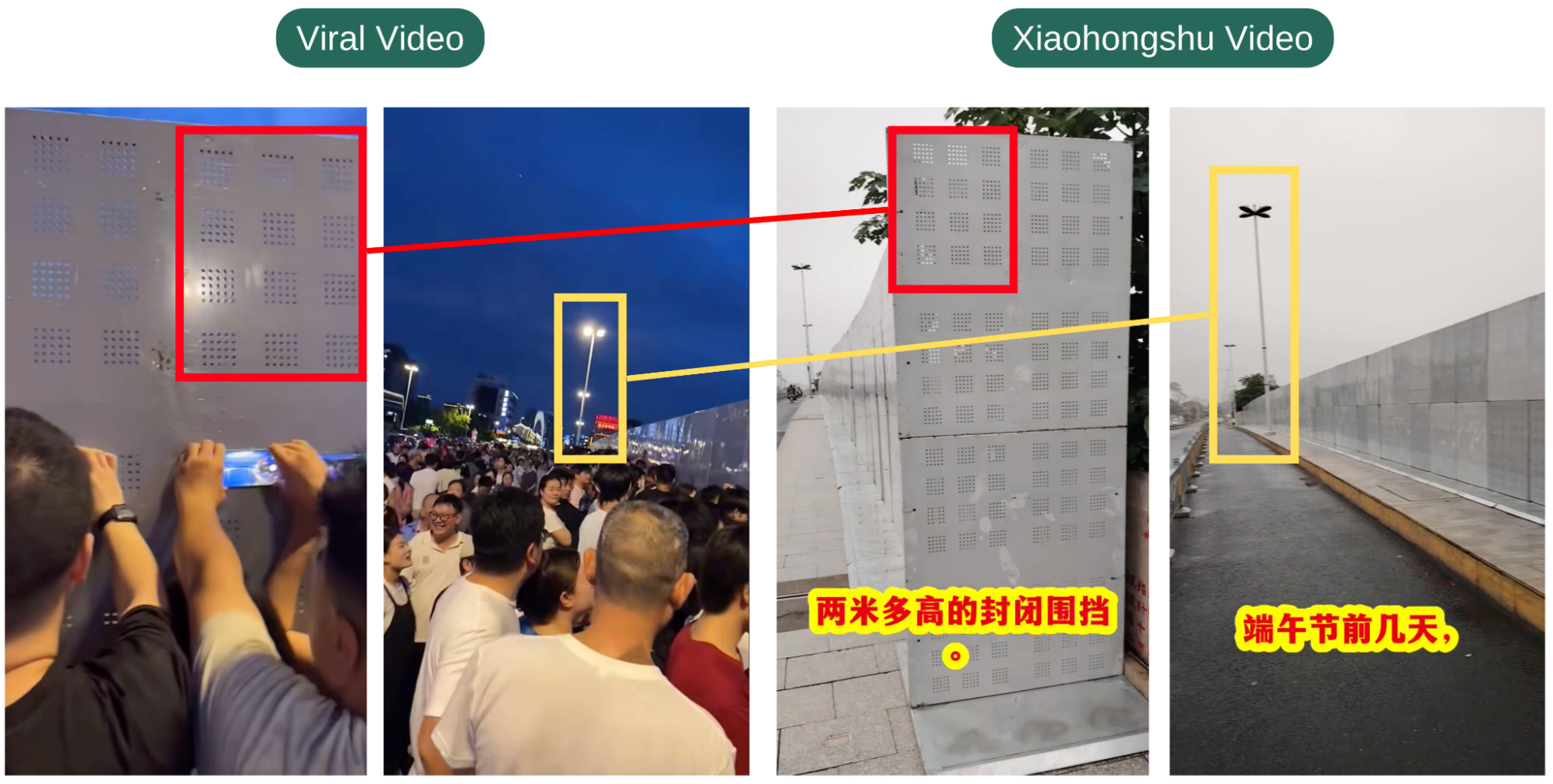
An iconic arched building in Suzhou, the Gate of the Orient (东方之门), is also visible near the center of the frame about eight seconds into the viral clip, further confirming the location.

Temporary barriers and crowd control
Annie Lab learned that the barriers were only temporarily installed.
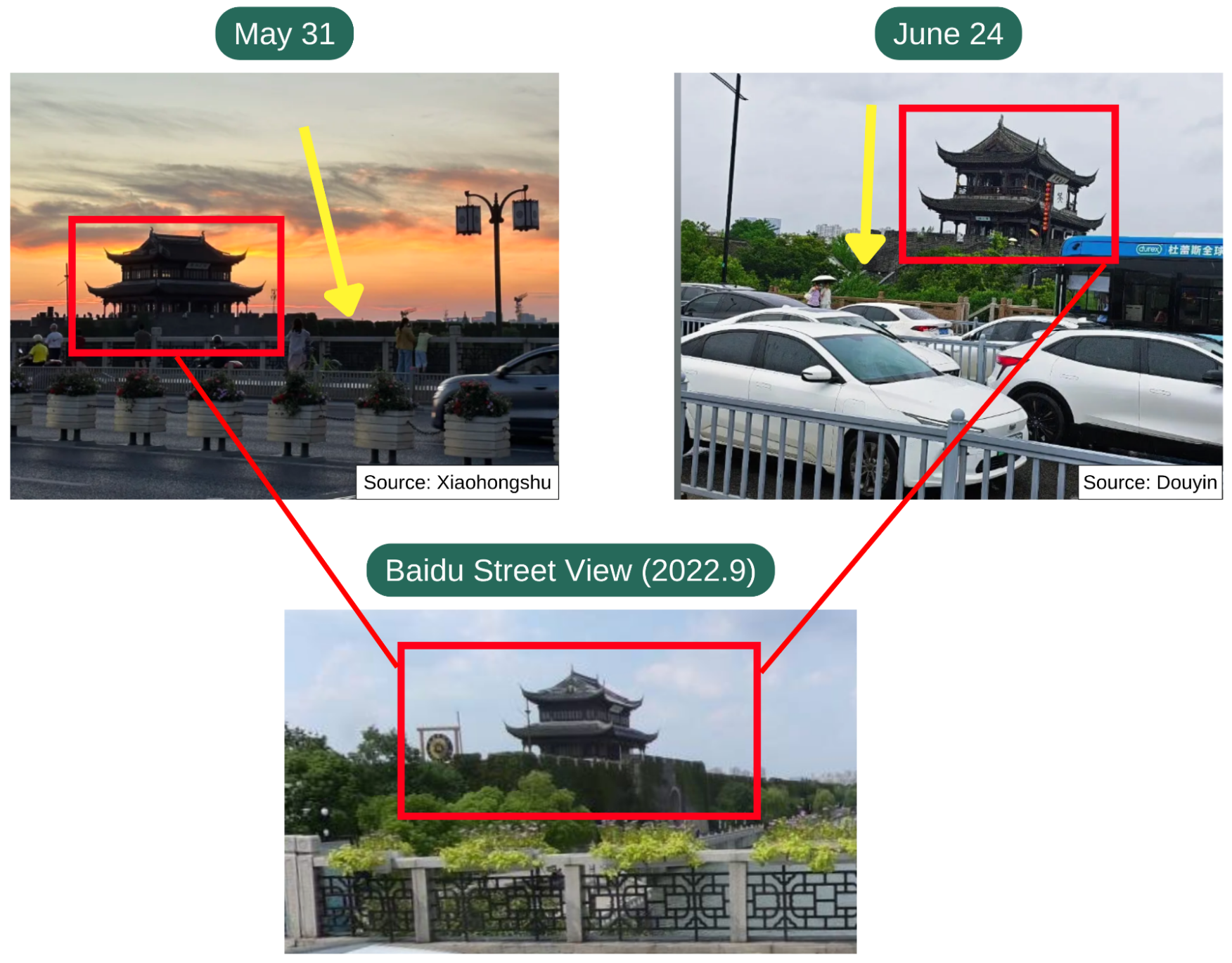
The bridge was clear of any barriers as of May 31, confirmed by a post on Xiaohongshu (archived here) showing Xiangmen Bridge without barriers.
A photo compilation by a local blogger on Douyin (archived here) dated June 24 also shows the bridge clearly with no erected steel plates, indicating the barriers were removed within days after the event.
Geolocation using Baidu Maps confirms that these images we gathered all depict the same location.
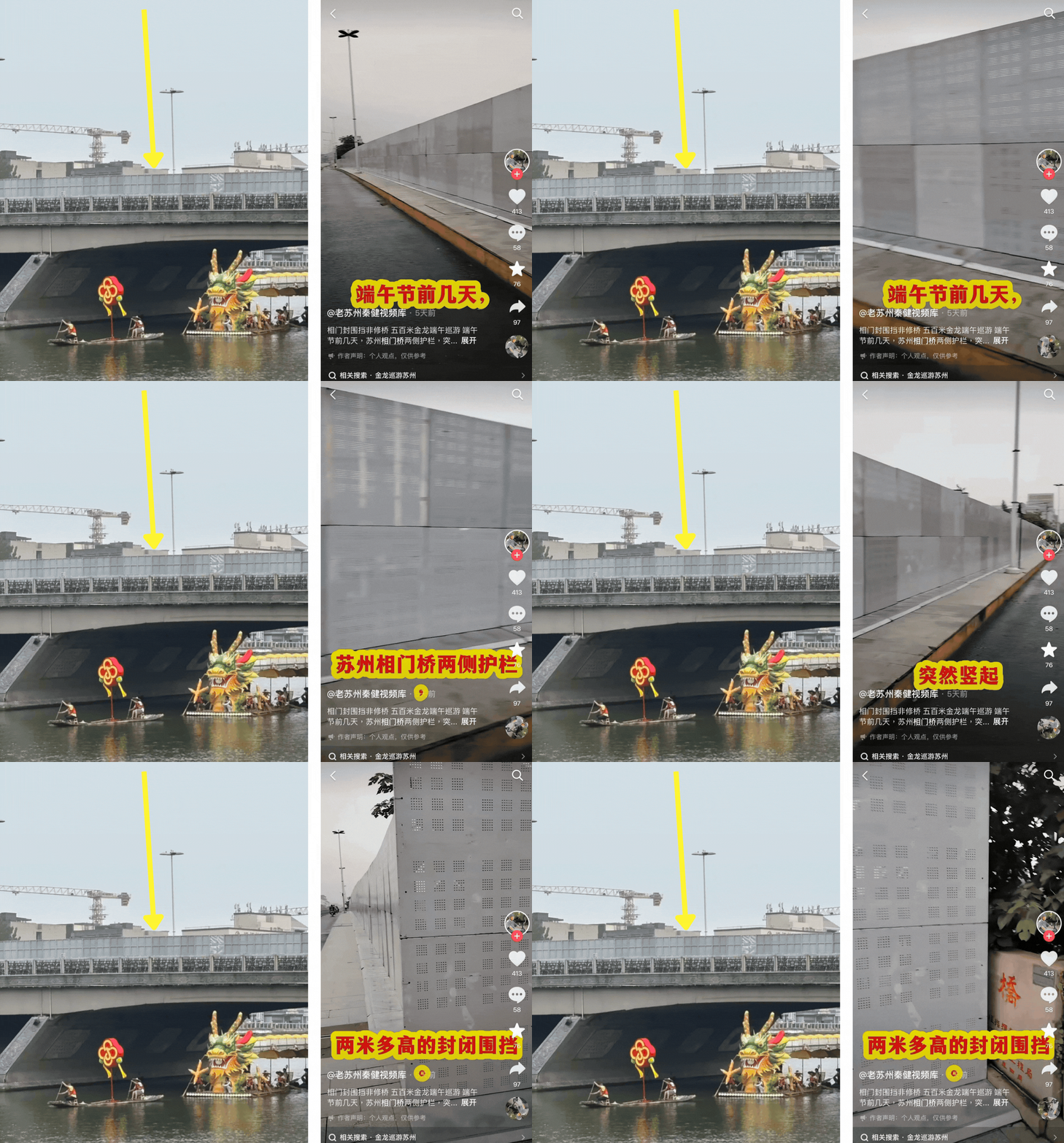
Meanwhile, several posts shortly before the event captured the barriers, including a Douyin clip (archived here) that discussed the recent installation, and other posts on Xiaohongshu and Douyin (archived here and here) showing the parade rehearsal on June 18.
Together, they suggest the barriers were installed sometime before the rehearsal and removed after the festival.
The placement of barriers on the north side of the bridge was likely a response to crowd management needs.
According to several posts on Xiaohongshu, Douyin, and ctrip.com, the dragon boat parade was scheduled to pass under Xiangmen Bridge from the north and then turn around.
If left unobstructed, the north side of the bridge would have offered one of the best vantage points for viewing the parade and therefore been a focal point for dense crowds.
On June 19, about four hours before the parade, the Suzhou Municipal Bureau of Culture, Radio, Television and Tourism (苏州文旅) issued a notice on WeChat (archived here) stating that “special circumstances” may require temporary crowd-control measures and asked visitors to follow instructions.
By 8:00 p.m., as the parade was ending, the Suzhou Release (苏州发布) published a WeChat post (archived here) advising the public to avoid the crowded section of Moye Road near Xiangmen for their safety.
As the parade drew large crowds along the Xiangmen Moat area, some visitors posted videos (here and here) on Bilibili complaining that they could not see past the people’s heads in front of them in the congestion (archived here and here).
Other viewpoints remained open
According to the municipal tourism bureau, the recommended viewing area for the parade wa along Moye Road (莫邪路), on the east bank of the outer moat, roughly a five-minute walk from Xiangmen Bridge.
Footage from different viewing points on social media platforms confirms multiple areas remained open to visitors, including the west bank near the city wall, the south side of the bridge, and the recommended best viewing spot on Moye Road (archived here, here, and here).
No tickets required
Contrary to the claim on X, official notices for the Suzhou Dragon Boat Festival events make no mention of tickets or ticket gates.
The closest designated scenic area near Xiangmen Bridge is the Xiangmen City Wall Cultural and Leisure Tourist Atrraction (相门城墙文化休闲景区) located just west of the bridge and stretching northward along the moat.
A local user on Xiaohongshu (archived here) shared photos and directions from the metro exit to the Xiangmen City Wall scenic area that show no ticket gate along the route.
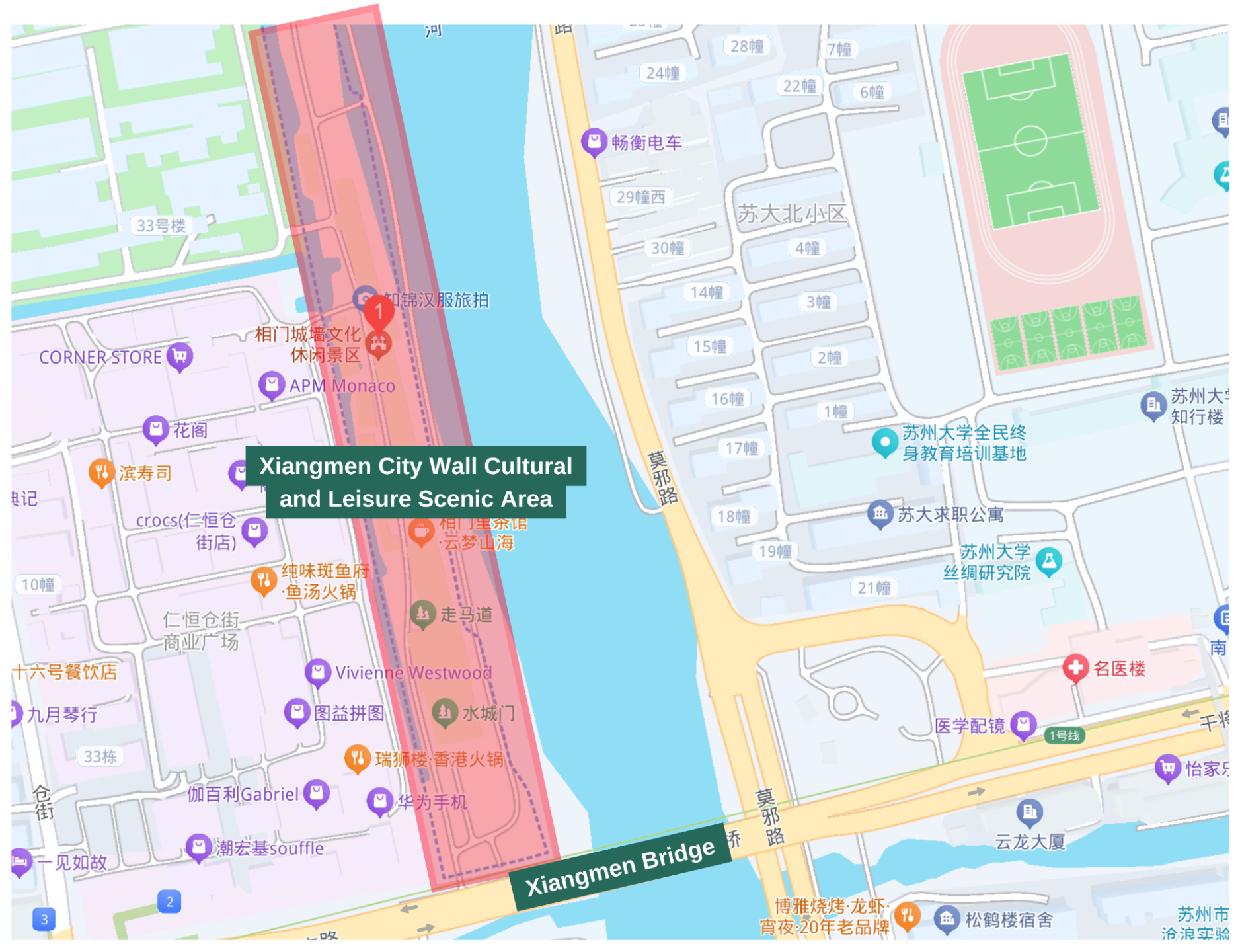
All information we gathered indicates that the festival’s water parade along the moat, and viewing from public streets and riverbanks, were free of charge.
Annie Lab found no evidence that authorities blocked views to force visitors to buy tickets, nor that the temporary barriers were related to ticketed entry rather than crowd control.

