Misleading: Video of ‘fake shrimp’ in China shows food replicas, seafood processing
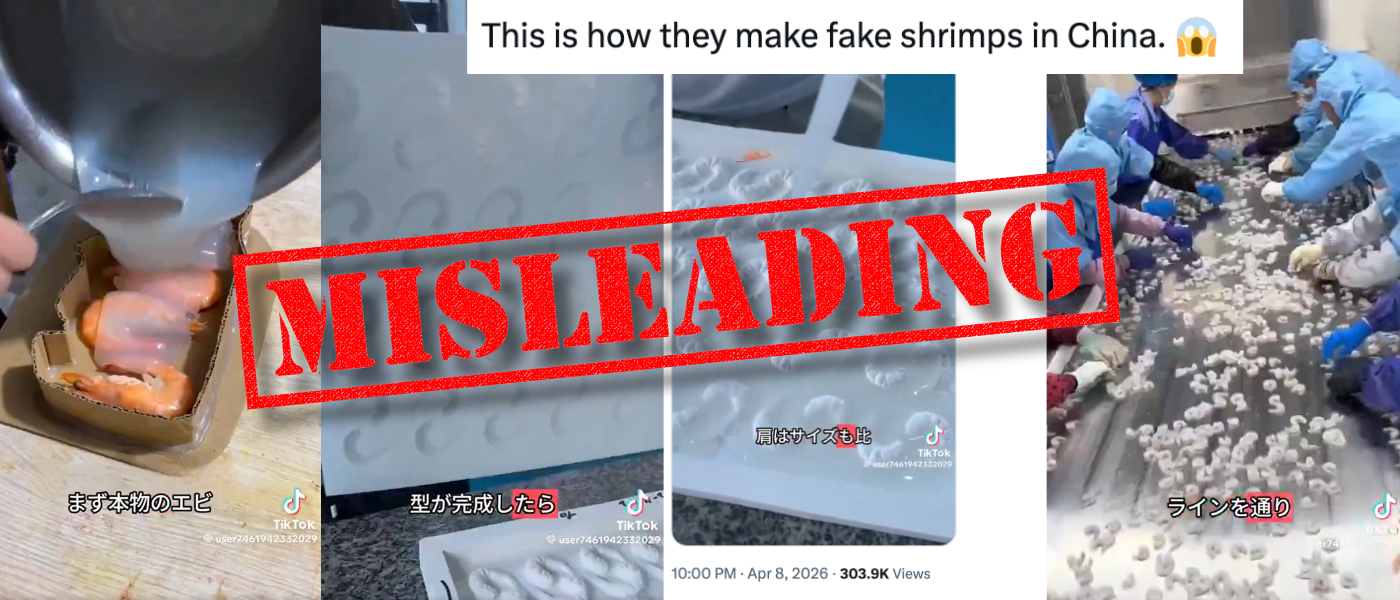
A widely circulating video on multiple platforms in many languages falsely claims that the footage shows factories in China manufacturing “fake” shrimps for human consumption.
One version on TikTok narrated in Japanese, for example, alleges that artificial shrimps made from gelatin and meat powder are being sold to unsuspecting consumers.
It was posted in February and received more than 5,000 likes since, despite the narration sounding like a synthetic AI voice and the Japanese subtitles displaying many incorrect characters.
The same clip was later posted on X on April 8 by an English-language account, gaining over 2,400 likes in one week.
In our investigation, Annie Lab found other similar video compilations with the same allegation spreading in multiple languages including Spanish, and French.
We also identified alternative versions in Japanese and English with different edits (another version in Japanese and English).
All these posts claim that “fake shrimps” are manufactured in mere minutes at small workshops where real shrimps are used only to create realistic molds.
However, the video does not show the production of counterfeit food. Instead, it stitches together clips of inedible food replicas used for display, making of a mold for plant-based shrimp alternatives for vegans, and standard industrial processes for frozen shrimp.
Misused mold manufacturing footage
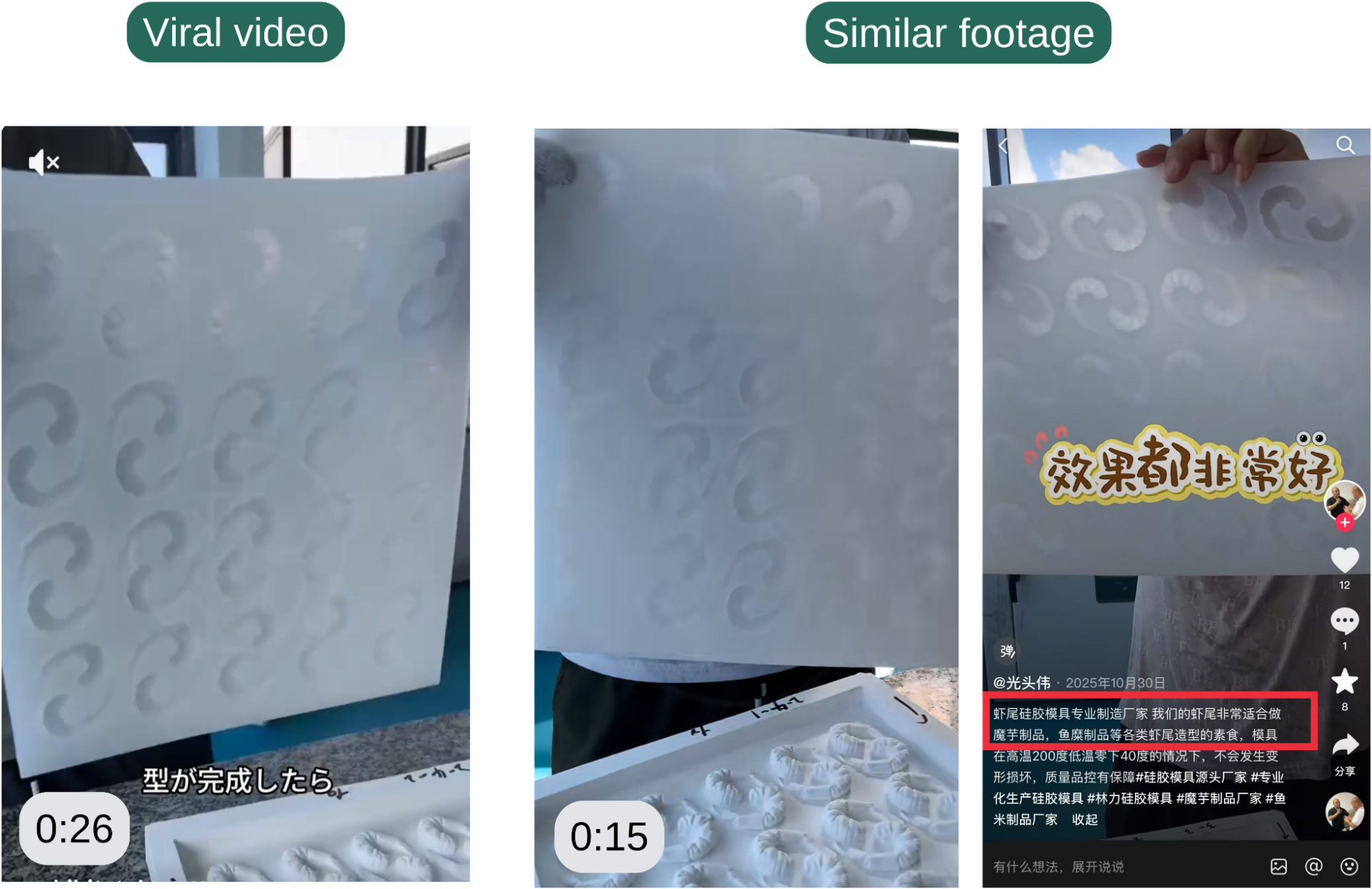
The clips appearing at 0:01 and from 0:19 to 0:26 in the TikTok video show content that matches a Douyin video (archived here) posted by a Chinese silicone mold manufacturer.
These clips depict how shrimp molds are made, which can be used to produce vegan foods such as konjac- or surimi-based products, as well as novelty items like shrimp-shaped biscuits, according to a promotional video (archived here) uploaded by the same Douyin user.
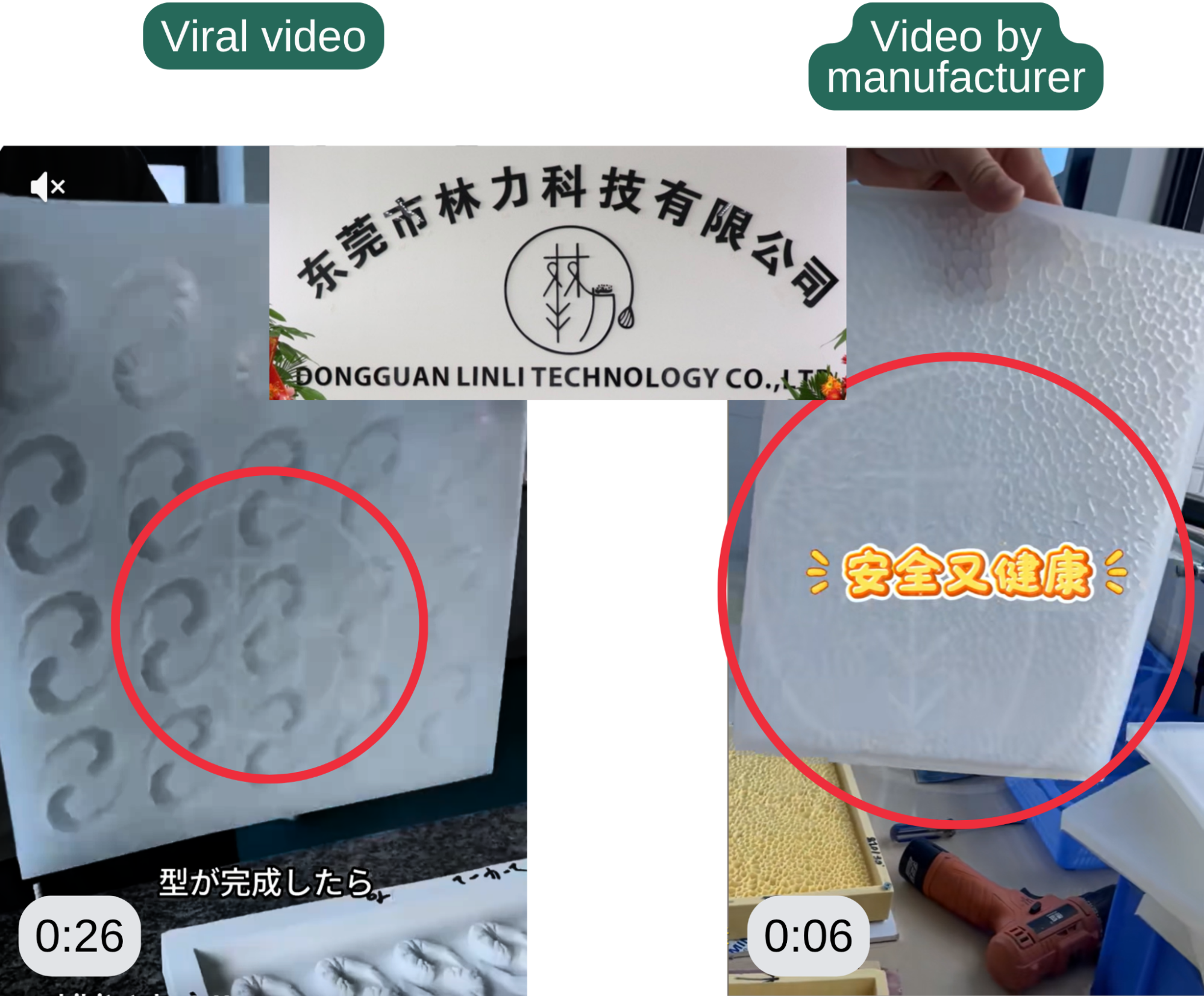
A faint watermark is visible at the end of the misleading clip (0:26), which is identical to a mold manufacturer’s company logo seen in their corporate videos (archived here).
Other segments from 0:02 to 0:05 and 0:37 to 0:43 come from a Douyin account (archived here) owned by a store specializing in custom food replicas.
Their videos show the creation of lifelike but inedible shrimp models, typically used in restaurant displays.
In the original videos (at 0:20, corresponding to 0:42 in the viral version), signage clearly identifies the products as “[food display] replica” but these indicators were removed in the viral version.

Two other segments, from 0:12 to 0:18 and 0:27 to 0:37, also come from a video (archived here) posted by the same account.
This one depicts molds being made from real shrimp and filled with casting materials.
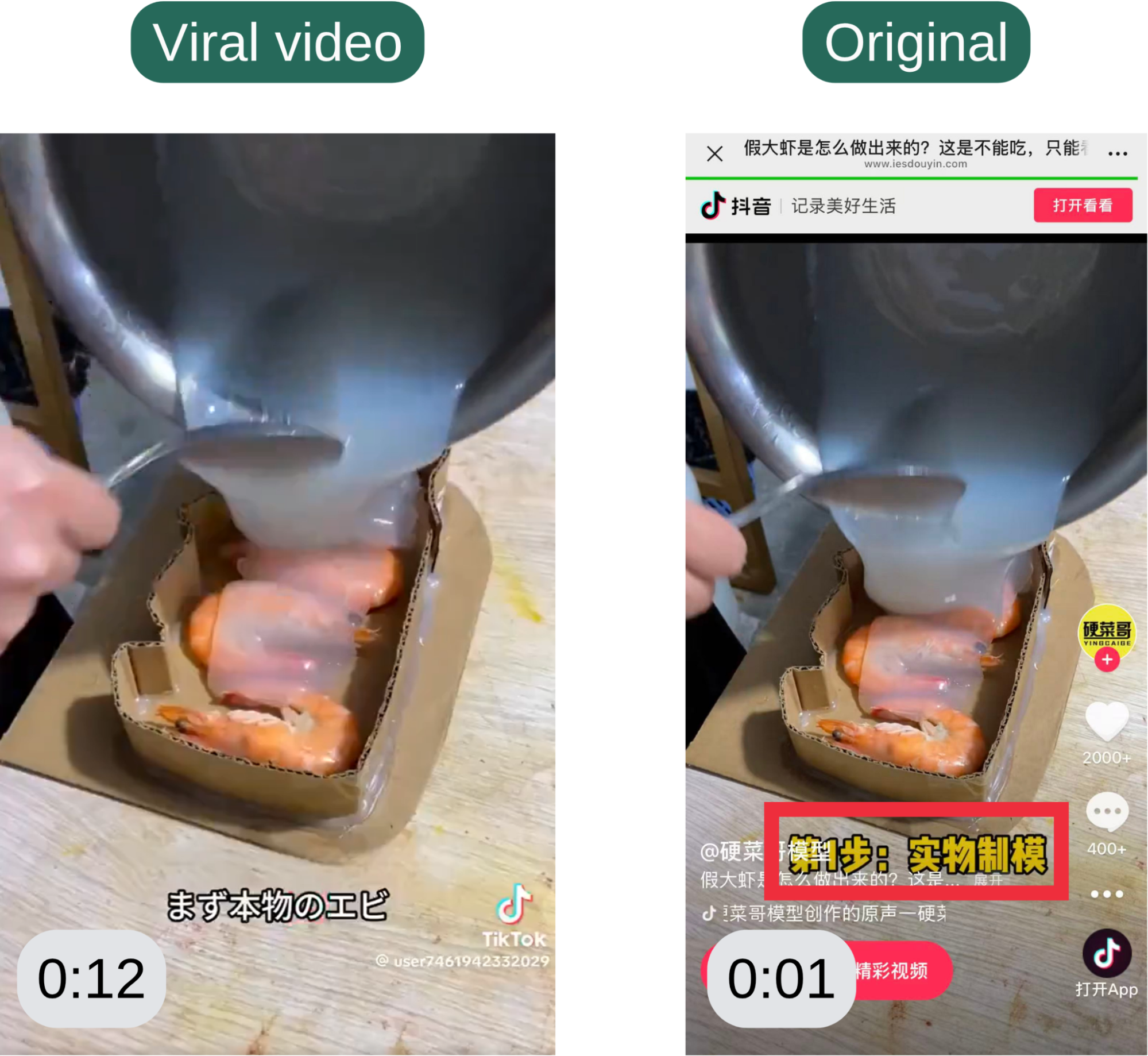
Original Chinese titles explicitly state the items are inedible replicas, but this context is omitted in the misleading compilation.
Legitimate seafood processing
A scene in the viral clip (from 0:44 to 0:45) shows shelled shrimps on a conveyor belt being submerged in water.
While Annie Lab did not find an exact match, a reverse image search indicates that what it shows is likely industrial freezing equipment commonly used in the seafood industry (see similar machines found on Douyin and a supplier’s website; archived here and here).
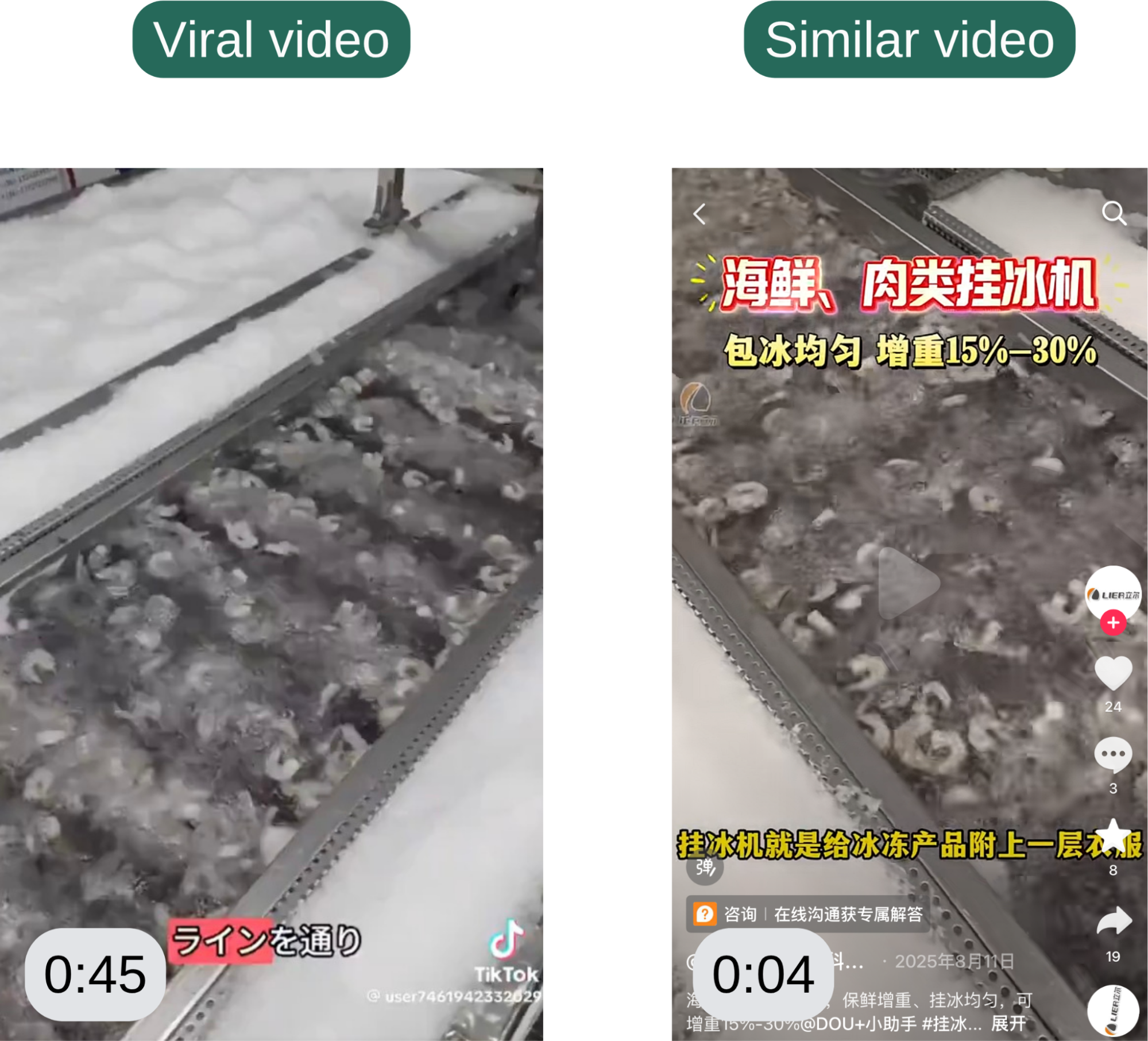
The segment from 0:45 to 0:47 is a horizontally flipped version of a Douyin video (archived here) posted by a processed seafood company.
The subtitles in the original promotional video, which were cropped out in the viral video, state that shrimp meat is sorted by workers before being put into a nitrogen freezer.

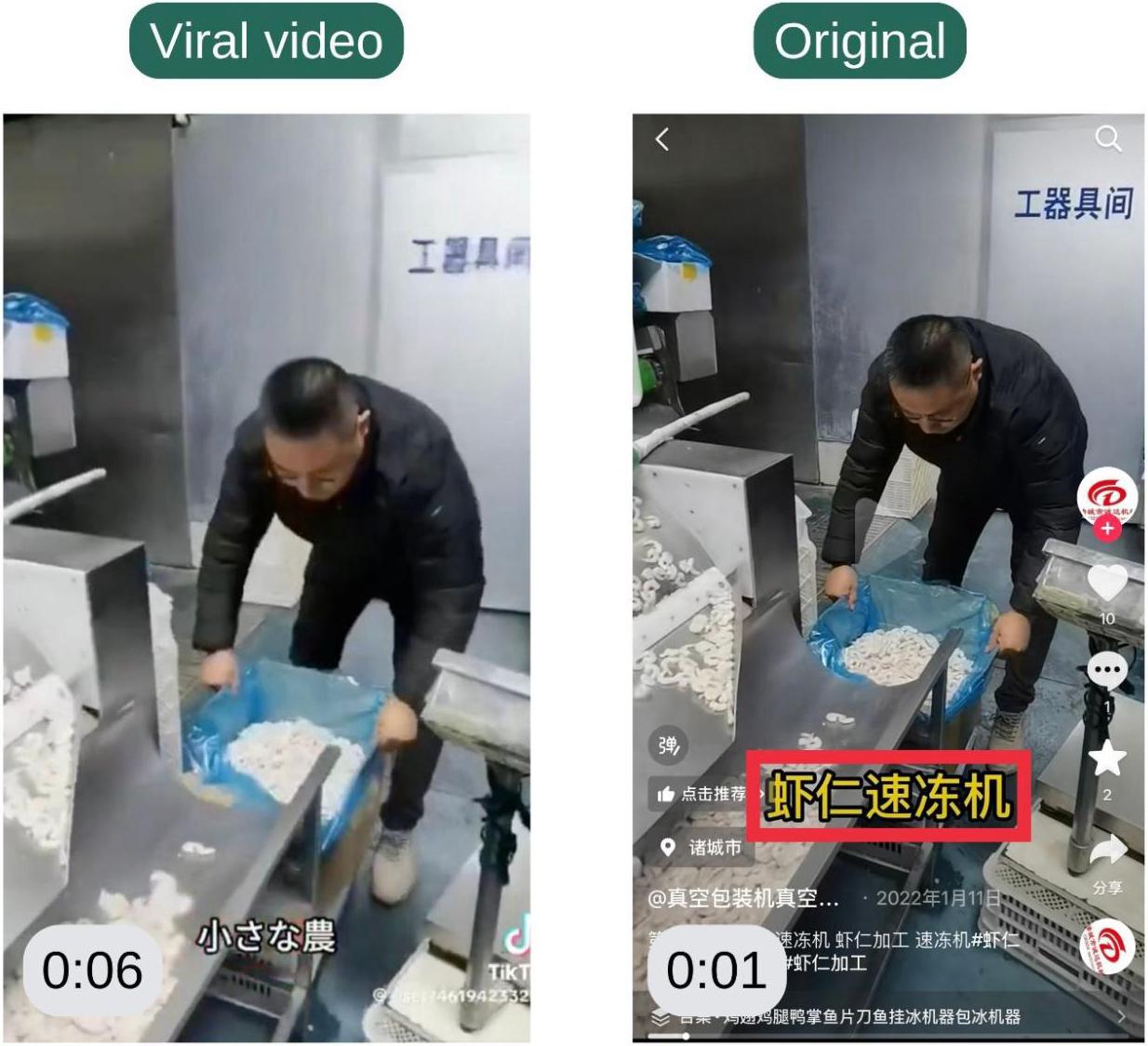
Similarly, clips showing machinery and workers handling shrimp (from 0:05 to 0:07 and 0:47 to 0:48) match another promotional footage on Douyin (archived here) posted by a company that sells food processing equipment.
The video’s description says it shows a “shrimp meat quick freezer (虾仁速冻机)”.
Ad, stock footage, and cooking clips
Some portions of the video, including packaged frozen shrimp and cooking scenes, appear to be generic or widely reused footage.
The segment from 0:07 to 0:11 is taken from a Douyin video (archived here) posted by a commercial account selling seafood, criticizing the quality of ordinary frozen shrimp meat in the market and promoting their own products.

The four scenes from 0:48 to 0:52 show bags of frozen shrimps in a carton box or on display.
These clips appear to have been circulating across multiple platforms and used as stock footage to advertise frozen shrimp products; for example, this Douyin video or this one (archived here and here).

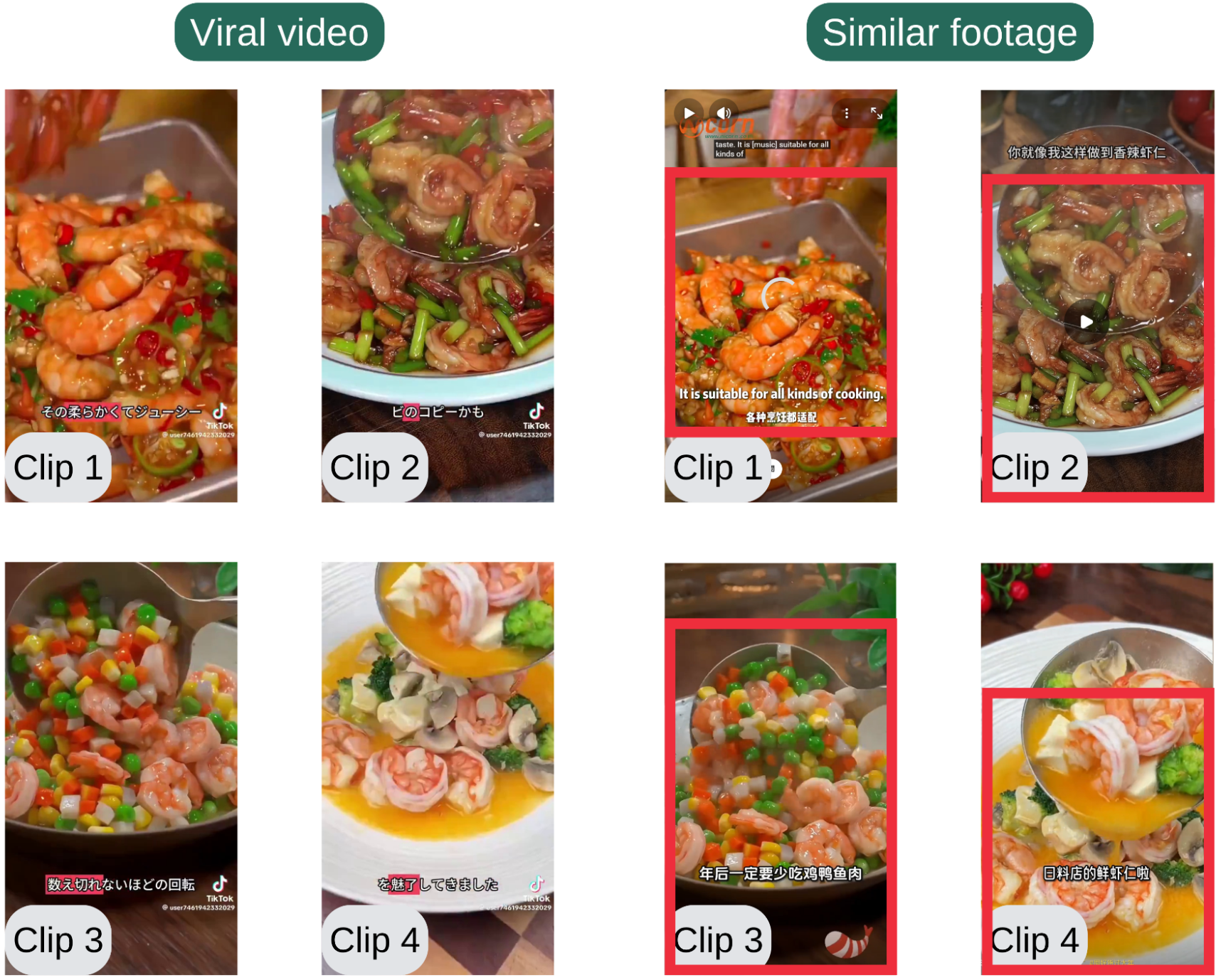
The cooked shrimp dishes seen from 0:54 to 0:59 come from different platforms (here, here, here, and here; archived here, here, here, and here), except for a less-than-half-a-second clip that we were unable to locate.
The segment consists of advertising videos for frozen shrimp or black pepper, and a cooking tutorial.
Reverse image searches indicate these clips are also likely generic footage recycled on the internet, with some returning more than 25 results on Baidu.
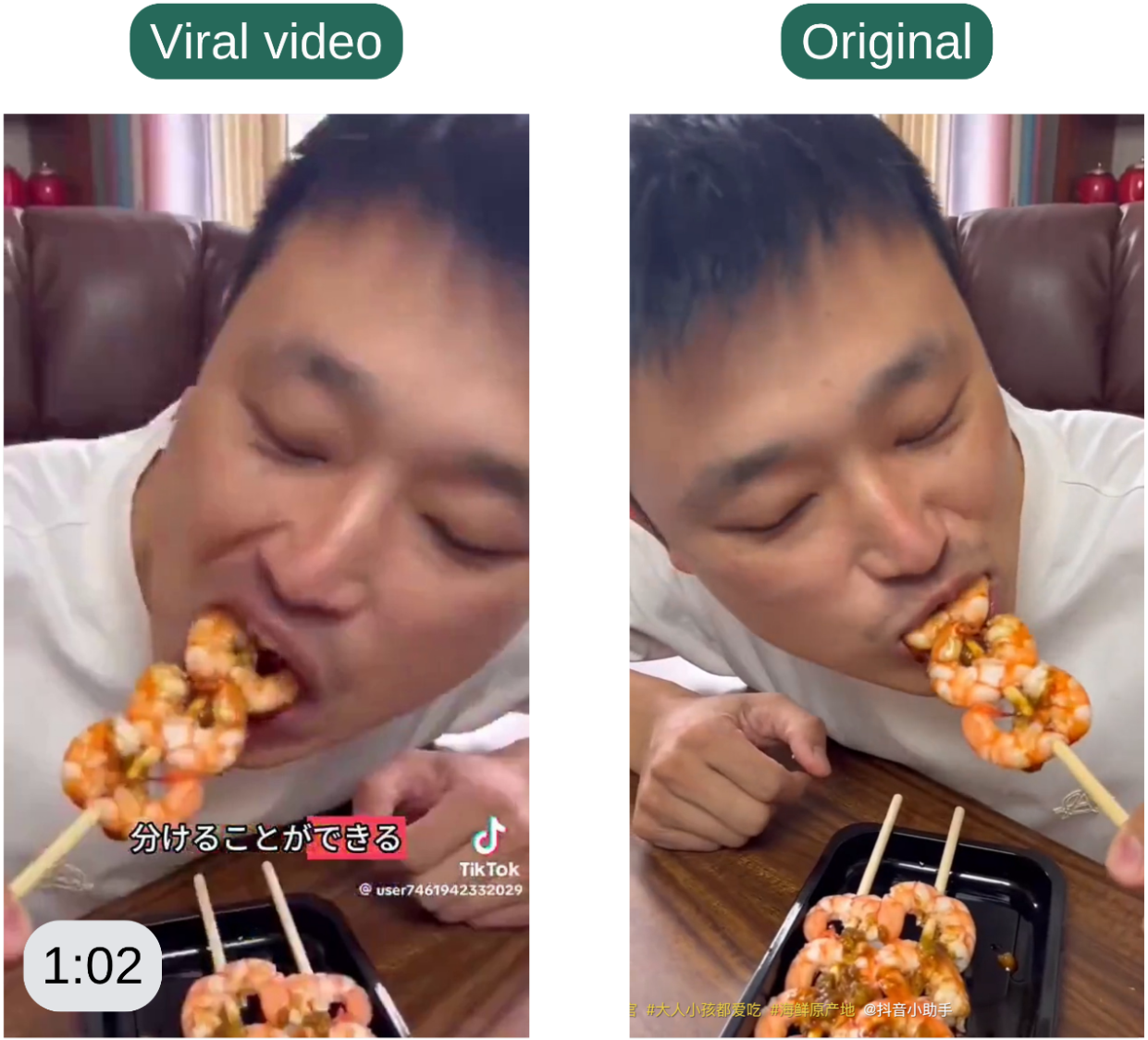
The final scene (from 1:01 to 1:03), showing a man eating shrimp skewers, comes from a 2023 Douyin video (archived here) promoting seafood products from Qingdao.
The viral version mirrors (flips horizontally) the original clip.
Food Scandals in China
While past reporting has documented cases of food fraud in China (see Global Times, SCMP, China Daily and People’s Daily; archived here, here, here, and here), including vendors injecting gelatin into shrimp to increase weight and improve appearance (fresher and plumper), Annie Lab found no credible reports or evidence of artificially manufactured shrimp being sold as real seafood.
We also debunked another video compilation falsely claiming that counterfeit sea cucumbers are manufactured in China.


