False: Video of Zhang Haidi standing from a wheelchair is AI-generated
【點擊查看本文中文版】
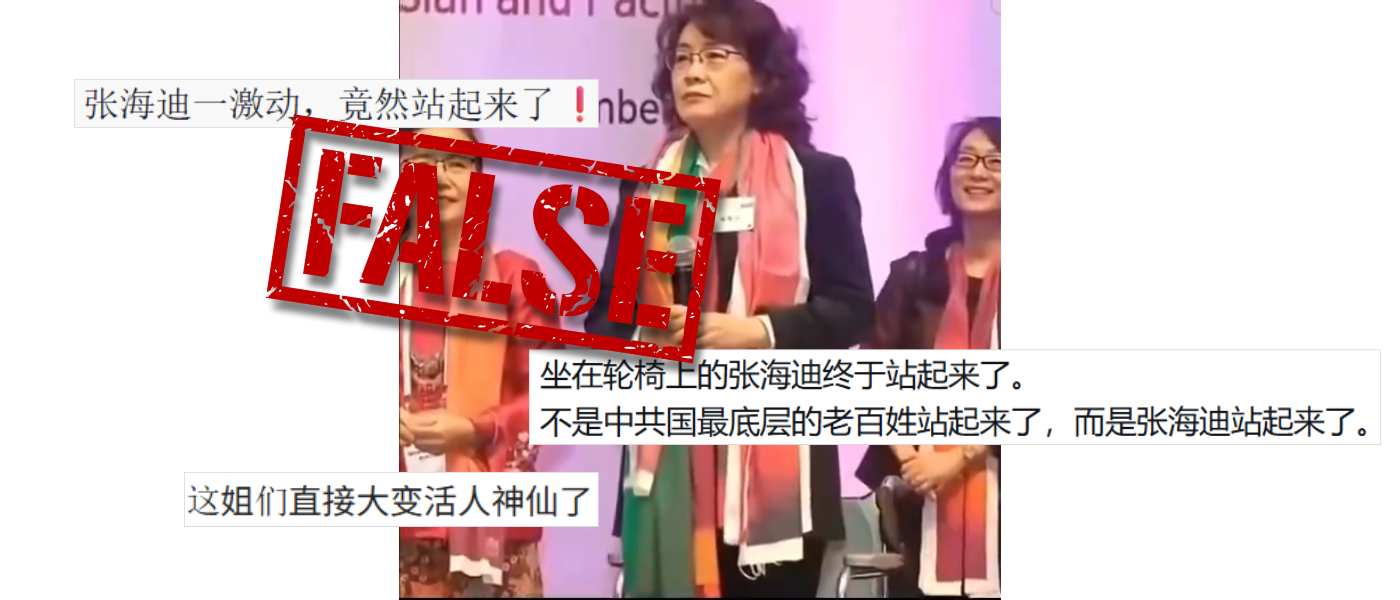
A video that purportedly shows Zhang Haidi (張海迪), a prominent Chinese writer and disability advocate, standing up from her wheelchair during an event went viral on social media in late October 2025.
Zhang, who has been paralyzed from the waist down since the age of five due to spinal hemangioma, has long been praised by the Chinese government as a role model (archived here). Unable to attend school, she educated herself and became a writer and a translator, according to media reports.
Zhang is internationally recognized for her work in advancing the well-being of people with disabilities in China.
She was a member of the Standing Committee of the 13th National Committee of the Chinese People’s Political Consultative Conference; and previously, she served as the chair of the China Disabled Persons’ Federation and the president of Rehabilitation International.
The video, which reignited persistent online debate about her condition, received over 800 likes and 200 shares on X, while also surfacing on Facebook, Reddit, and TikTok.
Similarly, another X post accused Zhang of faking her disability for more than 60 years. It included an image appearing to show her standing with a man and a child. This X post attracted more than 700 likes and 170 shares.
However, there is no credible evidence that Zhang stood up during the event. Multiple indicators in our investigation suggest the video was generated using AI models based on a news photo taken more than a decade ago.
Visual discrepancy suggests AI generation
A comparison between the video’s key frame and a Xinhua news photo from Nov. 2, 2012 (archived here) shows they are identical.
The state-run agency’s caption says Zhang received the “Asia-Pacific Disability Rights Champions Award” in Incheon, South Korea, an event hosted by the United Nations Economic and Social Commission for Asia and the Pacific (ESCAP).
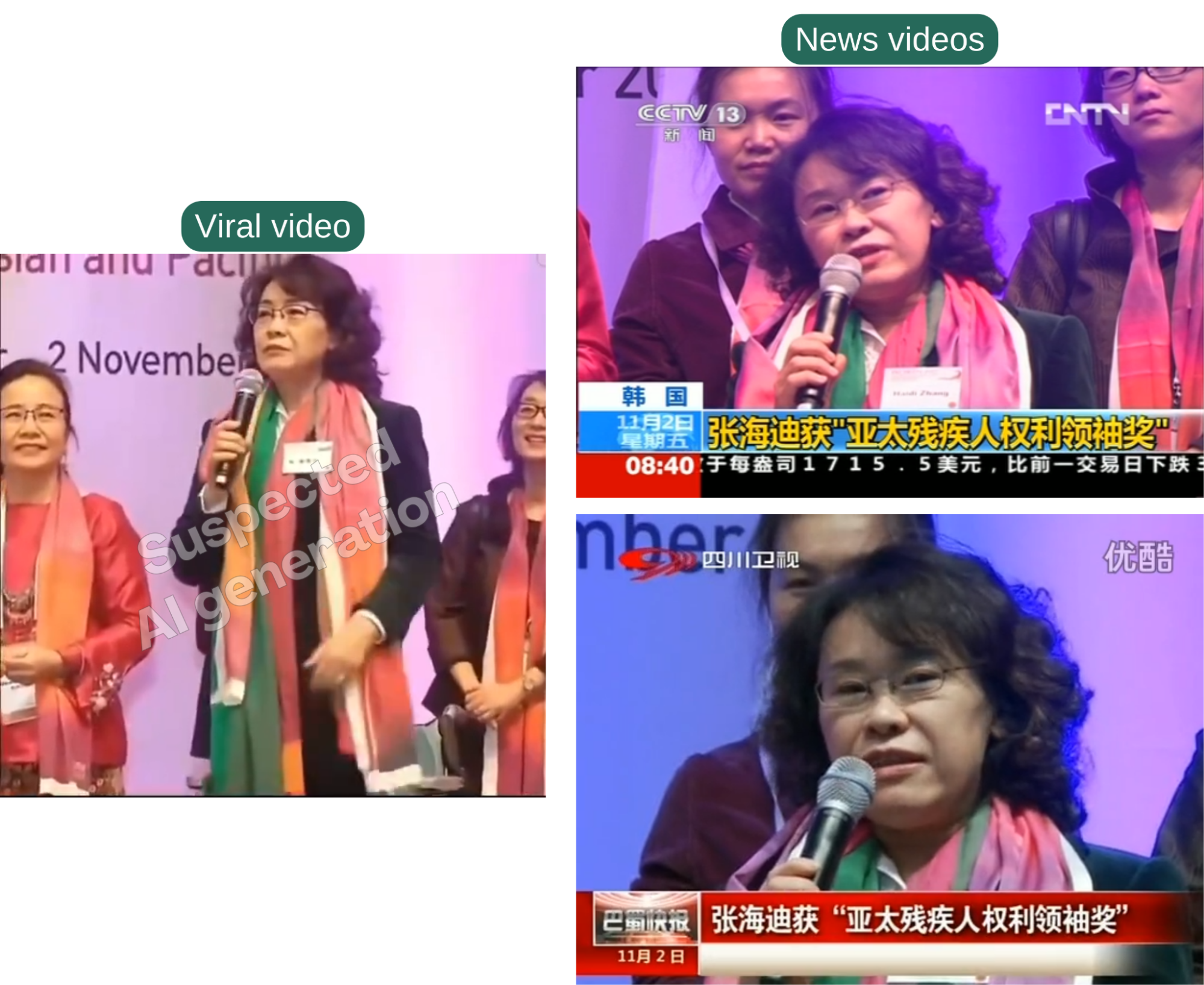
In the photo, Zhang is seated in a wheelchair while giving a speech. This image matches the viral video’s frame at 0:09; the postures, facial expressions, and relative positions of the four people are all identical.

It is likely that a generative image-to-video AI model was used to animate the original news photo. Any watermark left by the AI model was likely cropped out, just like Xinhua’s logo in the original photo.
Annie Lab also found related news footage aired by CCTV and Sichuan TV, both state-owned media outlets, about the event. In those broadcasts, the angles and positions of Zhang and the other participants show that she remained seated during her speech.
Further discrepancies indicate the video is inauthentic.
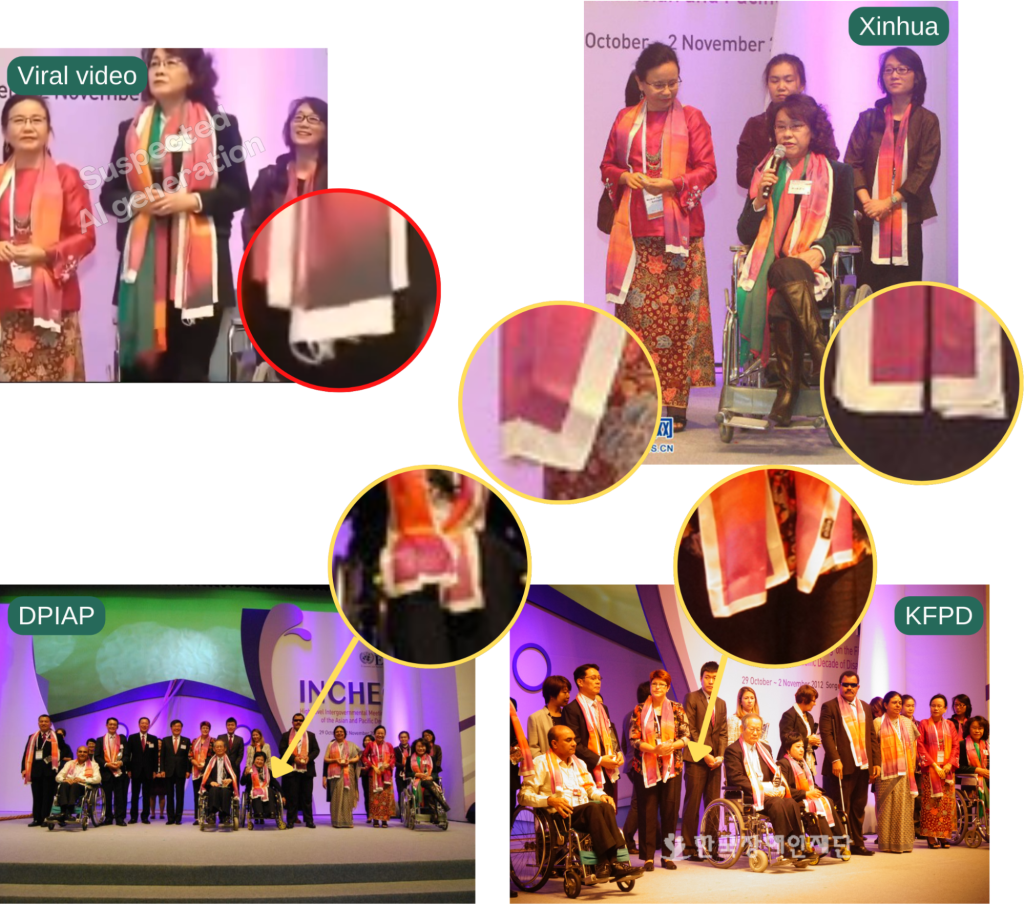
Annie Lab reviewed additional event photos posted by the Korea Foundation for Persons with Disabilities and Disabled Peoples’ International Asia-Pacific (archived here and here).
In genuine images, the multicolored ceremonial sashes worn by other award winners have distinct white borders on all four sides. In the viral video, however, Zhang’s sash appears distorted, missing its corners, which is a common artifact of AI rendering.
Annie Lab also contacted ESCAP to review its video archives of the event, but the UN’s regional development arm replied that it could not locate the related footage.
Persistent rumors about Zhang’s condition
Zhang has repeatedly faced online claims that she faked her disability or holds a foreign nationality (for example, Japanese or German nationality), usually framed within skepticism toward China’s promotion of state-endorsed “role models.”
Some of these allegations date back to the early 2010s, if not earlier. In 2010, for instance, a user on Zhihu, China’s Q&A platform (archived here), posted a detailed rebuttal to a similar accusation.
The user said many images used to question Zhang’s disability had been altered or taken out of context, and that misunderstandings about the living conditions of people with disabilities fueled some of the rumors.
In late October 2025, shortly after the viral video began circulating with claims doubting her disability, Zhang addressed her followers on Weibo, calling those posts “attacks” and “slander” against her character.


